
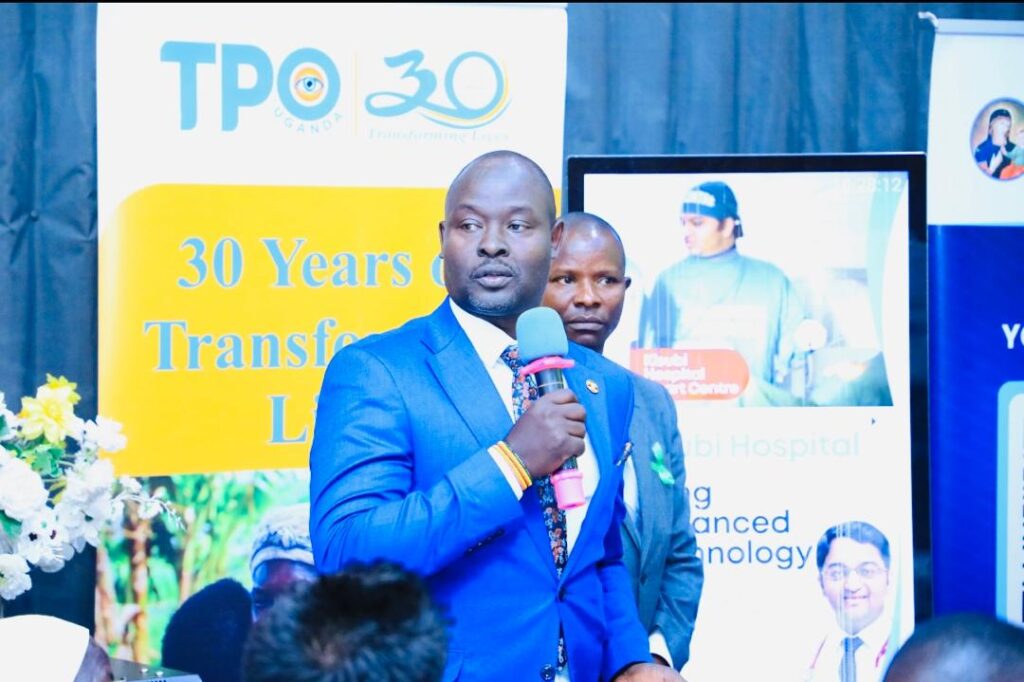
Speaking to participants at the Fourth Mental Health Awareness Camp 2026, Hon. Patrick Kityo Salimo, the Member of Parliament for Kapchorwa Municipality and a member of the Uganda Parliamentary Forum on Mental Health, called for stronger legal protections and increased investment in mental health services, saying justice cannot be achieved if people living with mental health conditions continue to face stigma and discrimination.
Addressing the gathering under the theme, “Advancing Mental Health Policy into Action,” Kityo said mental health remains one of the most underestimated dimensions of justice, yet it influences behaviour, decision-making, productivity, relationships and access to justice.
“Mental health is one of the most underestimated dimensions of justice in our time. It influences behaviour, decision making, relationships, productivity, and access to services, including access to justice itself. Yet it remains widely misunderstood and heavily stigmatized,” he said.
Drawing on his experience as a lawyer and former judicial officer, Kityo said the administration of justice had taught him that every case represents a human story, and that many struggles remain hidden unless society deliberately pays attention to mental wellbeing.
He noted that Uganda’s Constitution guarantees equality before the law, protection from discrimination and access to basic medical services, including mental healthcare. However, he said many Ugandans continue to face exclusion because of stigma.
“People lose opportunities not because they cannot perform, but because they are misunderstood. Families hide loved ones instead of seeking support. Individuals suffer in silence because they fear judgment,” he said.
Kityo urged Members of Parliament to ensure laws uphold human dignity, protect vulnerable people and place mental health at the centre of Uganda’s development agenda.
He said justice in mental health should be reflected in everyday life by ensuring children experiencing psychological distress receive support to remain in school, young people struggling with substance use are guided towards rehabilitation instead of punishment, mothers facing mental health challenges receive compassionate care, and every person seeking help is treated with dignity, confidentiality and without discrimination.
To achieve this, he called for stronger legal protections, improved enforcement mechanisms, increased financing for mental health services and wider access to care across the country.
Kityo also emphasized the need for closer collaboration between Parliament, the Judiciary, the Executive, local governments, civil society organisations and development partners, saying mental health is a shared national responsibility that cannot be addressed by one sector alone.
He further urged the country to confront stigma through sustained public awareness, arguing that legal reforms alone will not succeed without changing public attitudes.
“No law can succeed where ignorance is dominant. No policy can work where silence is allowed to persist. We must build a culture where mental health is openly discussed, understood, and supported,” he said.
He added that schools should become safe spaces that support emotional wellbeing, workplaces should promote psychosocial health, and communities should respond to people living with mental health conditions with understanding rather than judgment.
Kityo commended mental health professionals, researchers, civil society organisations and development partners for their continued efforts to expand services, raise awareness and support recovery across Uganda.
He reaffirmed his commitment, together with fellow members of the Uganda Parliamentary Forum on Mental Health, to advancing legislation, strengthening parliamentary oversight and advocating for increased investment in mental health services.
“A nation is not defined only by its laws, but by how those laws protect the dignity of its people. When we protect the dignity of persons living with mental health conditions, we strengthen justice itself. When we eliminate stigma, we strengthen human rights. When we invest in mental health, we invest in the strength, productivity, and future of our country,” Kityo said.
